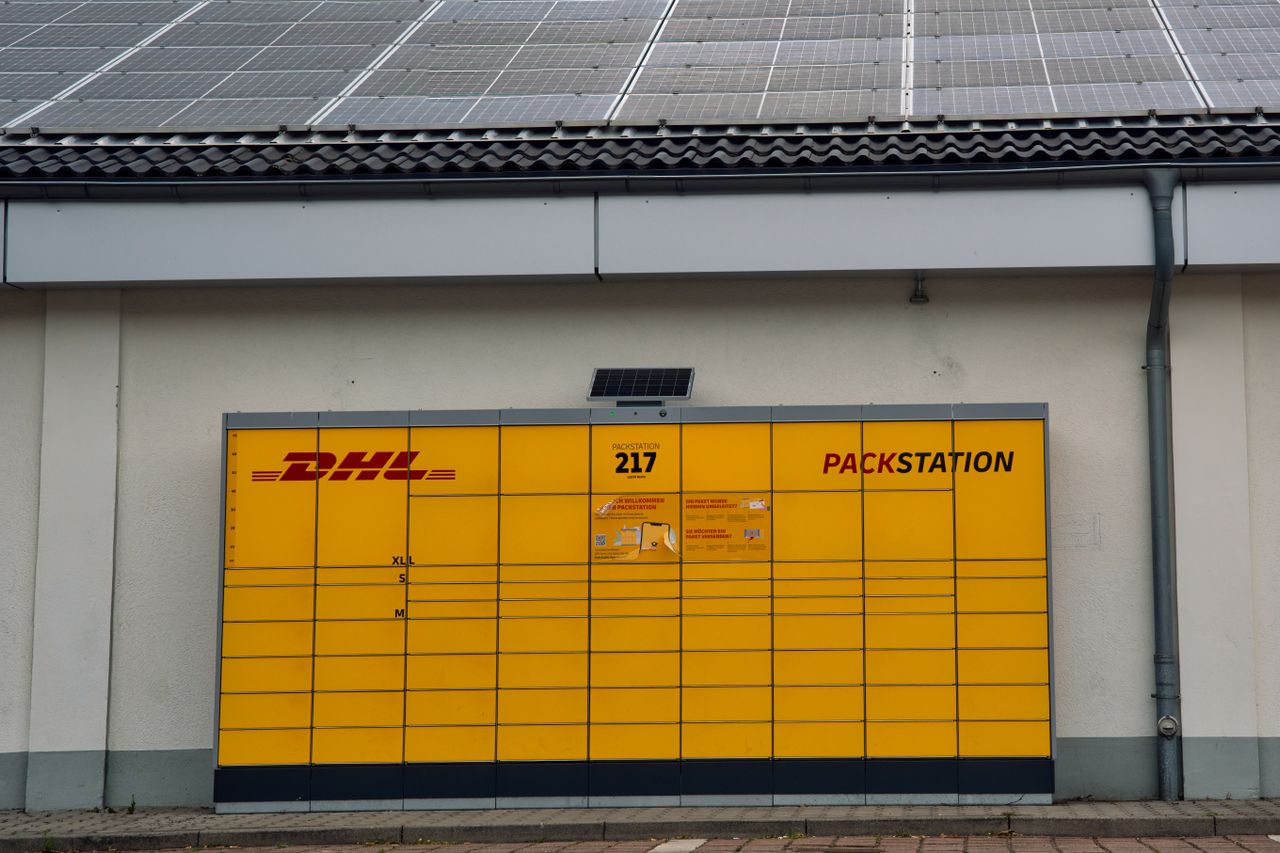

Out-of-home (OOH) delivery is where a parcel is sent to a nearby shop or locker instead of a customer’s front door. Though it sounds simple, last-mile delivery is the most complex leg of a delivery, and changing the destination from one-parcel-one-destination to multiple parcels at one destination has its own challenges.
How many lockers are available, how many parcels a store can hold, the turnover of parcels being picked up and making new lockers available, it’s all constantly changing and makes it difficult to predict or calculate which parcels to send out, when.
A leading out-of-home parcel network came to Adiona to solve this challenge. They partner with local retailers such as cafes, convenience stores, and similar small businesses to host parcels for pickup and those retailers then earn a small commission for hosting. For the recipients of the deliveries, it means collecting a parcel on their own schedule, as part of a trip they were already making. For the network, it means an ongoing routing problem – there's a limited number of retail partners, and each one can only store a small volume of parcels. So, deciding which store each parcel should go to is crucial.
Before Adiona, this was being solved with a three-kilometre radius rule to decide which store a parcel should be reallocated to when the first choice wouldn’t work and manual routing. It worked. But then the network grew, and the manual process hit a hard ceiling at around 20 stores. It simply couldn't keep pace with volume, and two compounding problems emerged:
- Store capacity was invisible
Retail partners have no dedicated storage space and limited capacity. Without a way to account for this in the routing logic, popular stores were routinely overloaded while others sat underused.
- Convenience was a guess
Customers chose their pickup store manually, with no visibility into how far that store actually was to walk to. A store that looked close on a map wasn't always realistically walkable. Plus the business had no idea of knowing when the customer would arrive.
Adiona’s routing optimization engine for out-of-home delivery
Adiona replaced the manual, threshold-based process with an automatic delivery routing optimization engine, built around three core capabilities:
1. Distance- and capacity-aware store allocation
Instead of a flat radius rule or manual customer choice, Adiona's route planning engine allocates each parcel to a store based on real walking time and distance. This is sourced from live mapping data combined with real-time store capacity. This prevents overloading any store while also picking locations customers can actually reach on foot.
2. Optimized delivery runs
Getting parcels to the right stores in the first place requires its own routing optimization. Adiona plans and optimizes the delivery runs that stock each store, replacing what had been an ad hoc, manually planned process.
3. Automated fallback delivery
When a customer doesn't collect their parcel, a "rover" retrieves it from the store and delivers it directly to their home. Adiona optimizes these fallback delivery routes too. This means fewer rovers are needed overall, and each one covers a tighter, more efficient route.
The results: Last-mile delivery routing that scales
The clearest measure of impact is scale. In a single quarter after moving to Adiona's delivery routing optimization engine, the network's real usage grew from around 4,300 to roughly 10,600 monthly stops. This more than doubled usage rates that had previously plateaued at a fraction of that volume due to manual route planning.
The shift to Adiona changed the shape of the business itself:
The manual process' hard cap of ~20 stores gave way to a routing model built to scale with the network.
Optimized fallback routing meant the fleet handling missed pickups could do more with less. In conversations with the team on the ground, rovers reported no issues with the delivery sequences the system generated, showing that the routing optimization was working the way it should.
Why routing optimization matters for out-of-home delivery
Out-of-home delivery provides convenience to customers, but the convenience is something you can lose as you scale.
A model that depends on manual thresholds or customer guesswork will always hit a ceiling, because neither store capacity nor real walking distance are things a person can track by hand once a network grows past a handful of locations.
Adiona's approach treats out-of-home delivery routing as its own unique delivery model, not just an extension of standard warehouse-to-door delivery. The model reflects a broader shift in the market, where major players like Amazon and Australia Post have been building out their own locker networks, signalling that out-of-home delivery is only set to grow.
