
The big, hairy goal: Australia's first end-to-end heavy road freight electric delivery
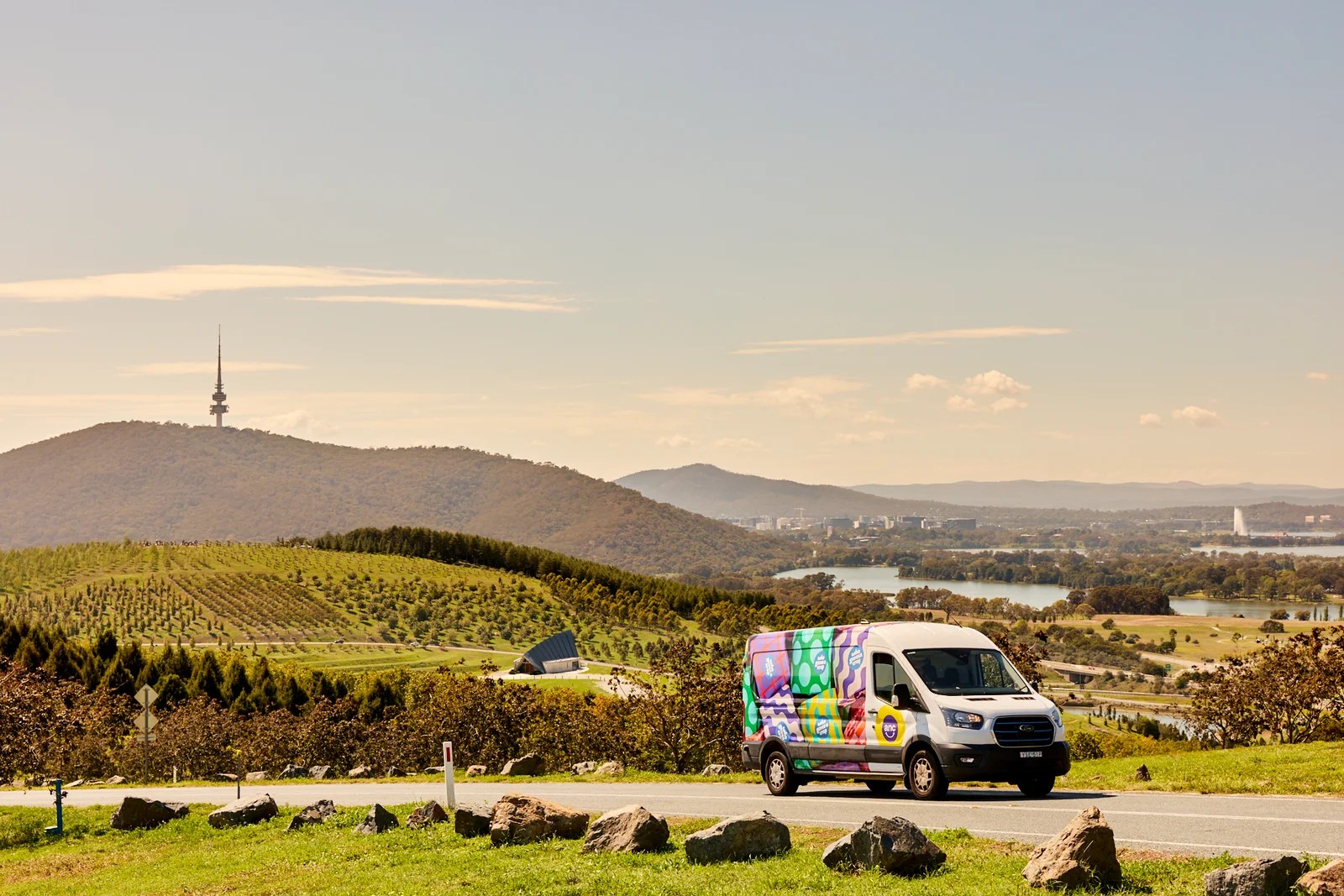
In partnership with Who Gives a Crap and ANC, New Energy Transport completed Australia's first fully zero-emissions, end-to-end freight delivery. A Windrose electric truck fitted with a Pantech trailer loaded with Who Gives a Crap toilet paper transported the cargo to Canberra, where it was cross-docked into ANC electric vans and successfully delivered to the end customer.
The truck was subsequently parked on the lawn of Parliament House after completing the zero-emission journey.
The Windrose truck used in the demonstration produces 1,400 horsepower, a figure that turned heads among even the most diesel-loyal truck drivers on the day.
The challenge: Confidence in a new technology
Electric trucking introduces a layer of operational complexity that diesel simply does not have. For starters, the range of an EV is not fixed, it varies with payload weight, elevation, traffic, climate, and driver behaviour. For this particular trip, the driver had never operated an electric truck before, so range anxiety was a very real concern.
Before committing to the delivery, NET needed to calculate with a high level of certainty:
- The route’s feasibility for the specific truck and payload
- How the elevation changes along the route would affect energy consumption
- What backup charging options might be needed
- How the truck would perform across a range of payload scenarios
Without being able to physically test the route in advance, Adiona’s EV-specific routing and simulation engine was the next best thing to a practice run.
"It was really great to be able to go into it with confidence, from the feasibility analysis we did with Adiona, based on the actual scenario. On the day, we knew what the outcome would be.”
How Adiona FlexOps EV Routing tested delivery route feasibility
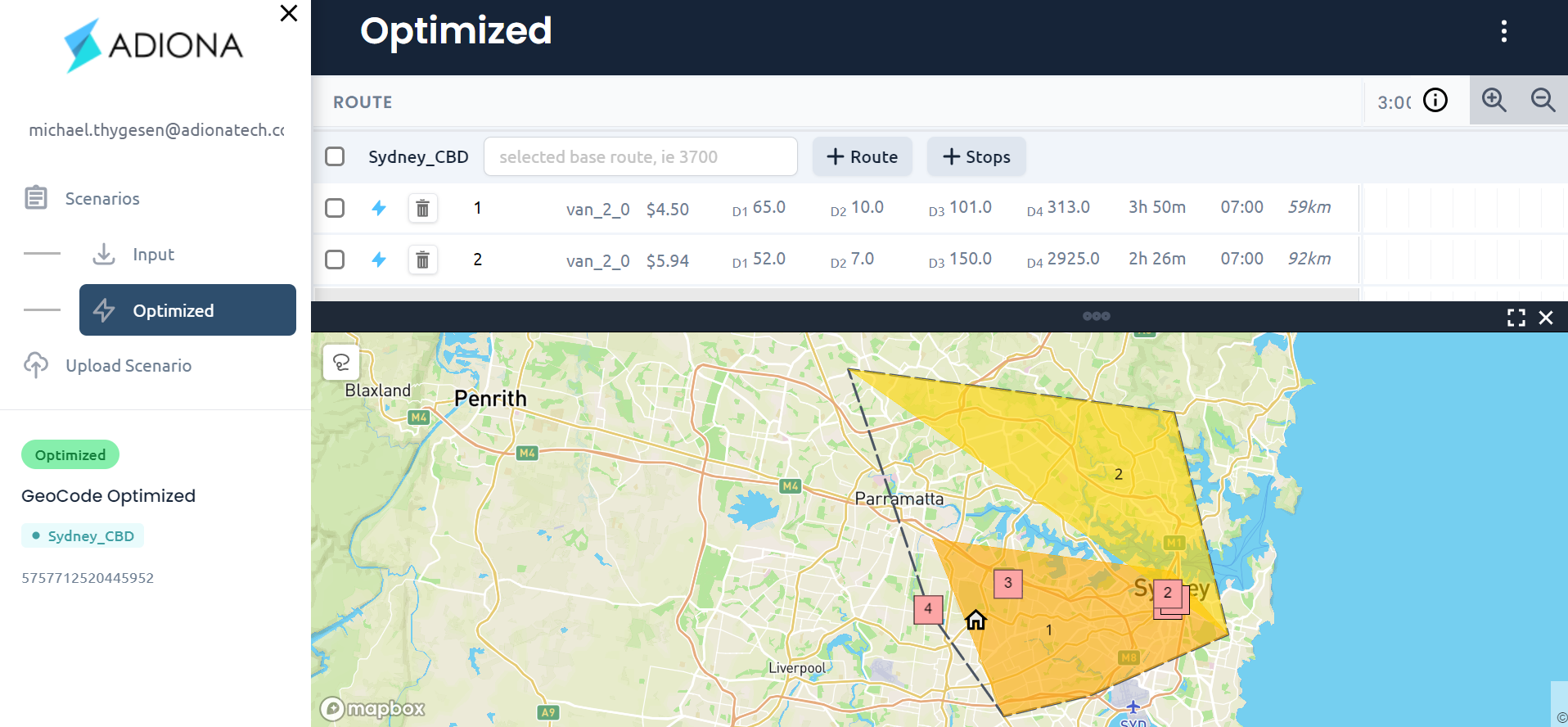
Taylor and the NET team used Adiona's EV Routing algorithm in the FlexOps platform to run a full feasibility analysis before the delivery took place.
The EVETA solution allowed them to simulate and test the route with their specific vehicle, then input:
- Start and end point
- Gross Combined Mass (GCM), accounting for truck, trailer, and payload
- Multiple payload scenarios to test the range of likely outcomes
The platform returned a detailed picture of the planned route including estimated travel time, projected energy consumption, and the full elevation profile of the journey. This last element is particularly important for electric trucks, where hills and inclines have a pronounced effect on battery draw.
"The accuracy of the output is crucial and Adiona has been incredibly accurate for things that you wouldn't expect it to have come as close to reality as it did, considering this is all completely new. And we’re using interesting trucks with interesting aerodynamics, varying payloads, varying driving conditions. But still we're always able to get really close to the expected outcome."
Having this analysis in hand meant the driver departed with confidence, and the operations team knew exactly what to expect before the trucks left the depot.
Beyond feasibility: TCO modelling with Adiona
NET also uses Adiona as part of its commercial decision-making process. When assessing a potential customer operation, the team uses Adiona's EVETA to estimate energy consumption for a given route and payload, then feeds that data into their Total Cost of Ownership (TCO) modelling.
"When we’re looking at a customer operation, we use Adiona to understand what the energy use would be, and then we plug that in to work out what our cost of energy would be and how much it's going to cost us to run that operation over time.
This creates a disciplined, data-led approach to quoting and accepting new business, ensuring that every new customer engagement is commercially sound before any trucks hit the road.
The bigger picture: Building an EV-first logistics business
NET's use of Adiona extends beyond individual route planning and optimization. As the company prepares to operate a site with fast charging infrastructure and a fleet of electric trucks, software will play a central role in optimizing the entire system.
Taylor describes a vision where fleet scheduling, energy optimization, and delivery planning all work together:
"We’re going to be operating a site with fast charging paired with a fleet of electric trucks. The way we run those trucks and optimize the site is going to be crucial for us to run a profitable business or a commercially viable business. We see software like Adiona as really important because we need to optimize the energy, the fleet, and the deliveries."

Advice for fleet operators considering electrification
Taylor's experience in transport decarbonisation across Europe and Australia has given him a clear view of where operators go wrong. He says the most common mistake is treating an electric truck like a direct diesel replacement, "you can't just buy an electric truck today and replace it with a diesel fleet without understanding the implications. There's been people who've bought trucks, sent it up at an incredibly high elevation, and been shocked that it didn't make it. Adiona factors all of that in."
His recommended approach for fleet operators:
- Start by mapping and optimizing your existing diesel routes using Adiona’s FlexOps route optimization platform to identify cost and emissions
- Use the EVETA algorithm on the optimized routes to identify which of those routes are genuinely feasible for electric vehicles
- Model the TCO for those EV-ready routes before committing to an EV purchase.
"I would really recommend Adiona for fleet managers or any transport companies looking to figure out how to optimize their fleets. Even if you're not looking to get into the EV space, there's a lot of money and a lot of emissions that can be saved by doing that as a first step."
Working with the Adiona Team
Taylor notes that Adiona's EV capability is one of the first in the market and he sees that as a huge advantage for fleet owners who are quicker to adopt EVs. Being an early user means having a genuine influence on how the product develops.
"The Adiona team have been really great at accepting our feedback and working with us. They're willing to invest time to help us make it very user-friendly for what we're trying to do. I like being involved in it now so we can start to have an influence on what the product will be when we use it at scale. I would definitely recommend Adiona. Having a platform that can very accurately analyze how operations will look to help your decision-making process and understand what opportunities you already have in your fleet or network is super important."
